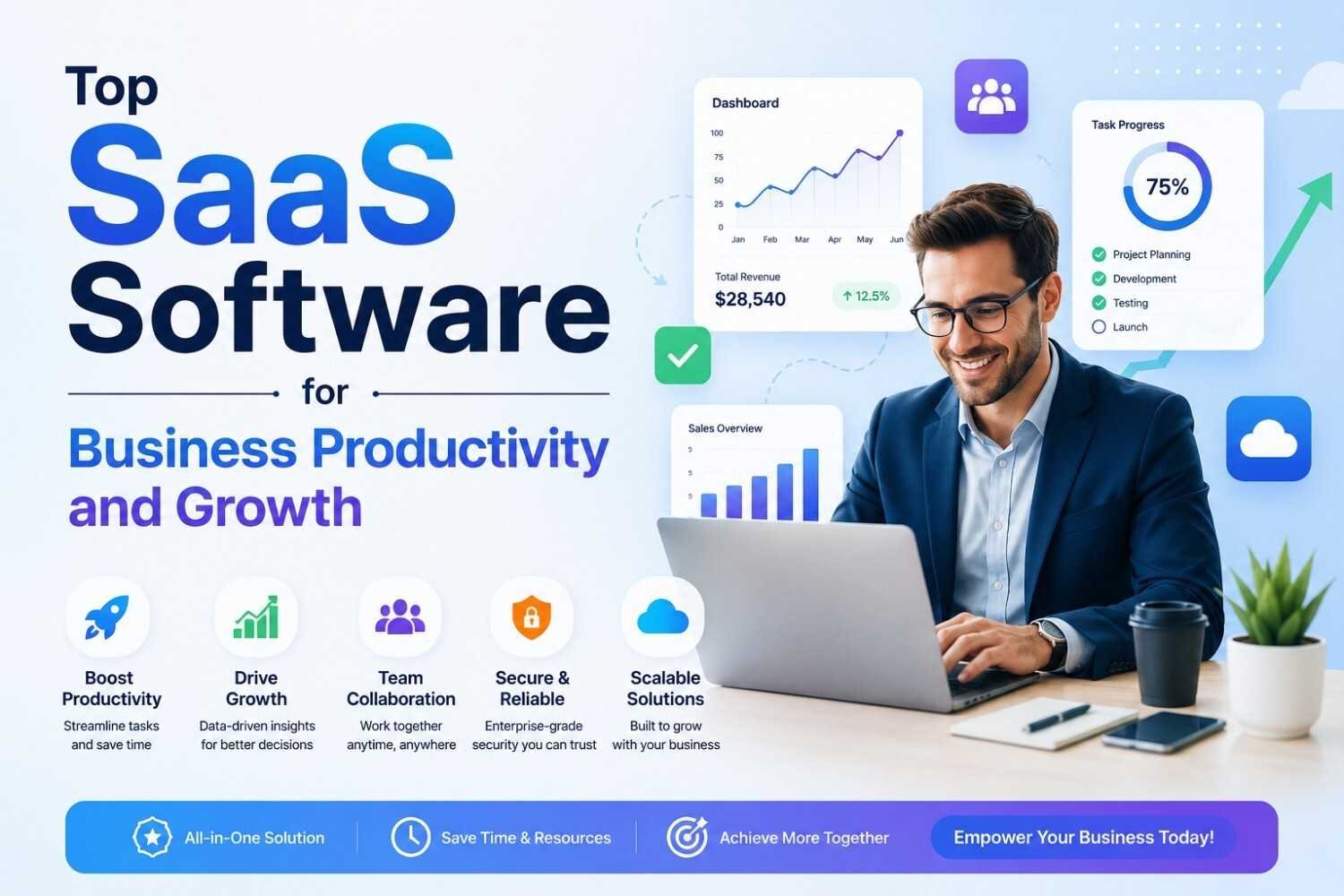
Modern businesses are increasingly relying on Software as a Service (SaaS) solutions to streamline operations, improve collaboration, automate repetitive tasks, and drive revenue growth. Whether you're a startup, small business, or large enterprise, choosing the right SaaS platform can significantly increase productivity while reducing operational costs.
From CRM software and ERP systems to AI-powered automation and project management tools, SaaS applications are transforming how organizations work in 2026.
What is SaaS Software?
Software as a Service (SaaS) is cloud-based software delivered through the internet. Instead of installing software on individual computers, businesses access applications using a web browser.
Benefits include lower infrastructure costs, automatic software updates, remote accessibility, improved security, easy scalability, and subscription-based pricing. Because of these advantages, SaaS has become the preferred software model for organizations worldwide.
Why Businesses Choose SaaS Solutions
Businesses adopt SaaS platforms because they provide flexibility and measurable ROI. Major advantages include reduced IT expenses, faster implementation, cloud data backup, real-time collaboration, AI-powered automation, secure cloud infrastructure, and easy integration with other applications.
Best SaaS Software for Business Productivity
1. CRM Software
Customer Relationship Management software helps businesses manage leads, customers, and sales. Benefits include lead management, sales pipeline tracking, email automation, customer support, and analytics dashboards. Perfect for sales teams, marketing agencies, startups, and enterprises.
2. ERP Software
Enterprise Resource Planning software integrates core business operations into one system. Features include inventory management, accounting, procurement, manufacturing, payroll, and human resources. ERP systems reduce manual work while improving operational efficiency.
3. Project Management Software
Project management platforms help teams collaborate effectively. Common features: Task management, team collaboration, file sharing, time tracking, workflow automation, and project reporting. These solutions improve productivity and project completion rates.
4. Accounting SaaS Software
Accounting software automates financial operations. Key features: Expense tracking, invoice generation, GST/VAT management, financial reporting, payroll integration, and tax calculations. Businesses save significant time by automating bookkeeping.
5. HR Management Software
HR SaaS solutions simplify employee management. Features include attendance, payroll, recruitment, performance evaluation, leave management, and employee self-service. These tools improve workforce productivity while reducing HR workloads.
6. AI Business Automation Software
Artificial Intelligence is changing business operations. Popular AI capabilities include chatbots, workflow automation, AI assistants, customer support, predictive analytics, document processing, and sales forecasting. AI significantly reduces repetitive work and improves decision-making.
7. Business Intelligence Software
Business Intelligence (BI) tools help companies analyze large amounts of data. Features: Interactive dashboards, KPI tracking, revenue forecasting, data visualization, and predictive reporting. Business leaders use BI software to make informed strategic decisions.
8. Marketing Automation Software
Marketing SaaS platforms automate customer engagement. Capabilities include email campaigns, social media scheduling, lead nurturing, customer segmentation, and campaign analytics. Marketing automation increases conversion rates while reducing manual effort.
9. Cloud Storage Solutions
Cloud storage enables secure document management. Benefits include remote access, automatic backup, file sharing, data encryption, and team collaboration. Cloud storage is essential for hybrid and remote work environments.
10. Communication & Collaboration Software
Effective communication tools improve teamwork. Features include video meetings, instant messaging, team channels, file collaboration, and screen sharing. These platforms help distributed teams remain connected.
Essential Features to Look for in SaaS Software
- Cloud security
- Data encryption
- AI capabilities
- Automation tools
- API integrations
- Mobile applications
- Customer support
- Custom dashboards
- Reporting
- Scalability
- User permissions
- Multi-language support
How SaaS Improves Business Growth
- Increasing employee productivity
- Improving customer satisfaction
- Reducing operational costs
- Automating workflows
- Enhancing collaboration
- Providing real-time analytics
- Supporting remote work
- Accelerating decision-making
Emerging SaaS Trends in 2026
- AI-powered copilots
- No-code and low-code platforms
- Hyperautomation
- Predictive analytics
- Vertical SaaS solutions
- Enhanced cybersecurity
- Zero Trust architecture
- Intelligent workflow automation
- Industry-specific cloud software
- AI-driven customer experiences
Tips for Selecting the Right SaaS Software
- Define business objectives.
- Identify key productivity challenges.
- Compare pricing models.
- Evaluate integration capabilities.
- Test free trials.
- Review security certifications.
- Check scalability.
- Assess customer support quality.
- Read user reviews.
- Measure ROI after implementation.
Frequently Asked Questions (FAQs)
What is SaaS software?
SaaS (Software as a Service) is cloud-hosted software accessed through the internet on a subscription basis.
Why is SaaS better than traditional software?
SaaS reduces infrastructure costs, offers automatic updates, improves accessibility, and scales easily as businesses grow.
Which SaaS software is best for small businesses?
The best choice depends on your needs, but CRM, accounting, project management, and AI automation platforms are among the most valuable for small businesses.
Is SaaS software secure?
Reputable SaaS providers use encryption, regular security updates, access controls, and compliance certifications to protect business data.
Conclusion
The right SaaS software can transform the way businesses operate by improving productivity, reducing costs, and enabling scalable growth. Whether your organization needs CRM, ERP, AI automation, project management, or business intelligence, cloud-based solutions provide the flexibility and innovation required in today's competitive market.
As AI, automation, and cloud technologies continue to evolve in 2026, investing in modern SaaS platforms is a strategic step toward long-term business success and sustainable growth.